The first credit card has one job, and it isn’t rewards, status, or airport lounges. It’s building a credit file — the boring administrative record that later decides your apartment application, your car loan rate, and eventually your mortgage. Treat the first card as infrastructure, and the decisions get simple.
What you’re actually building
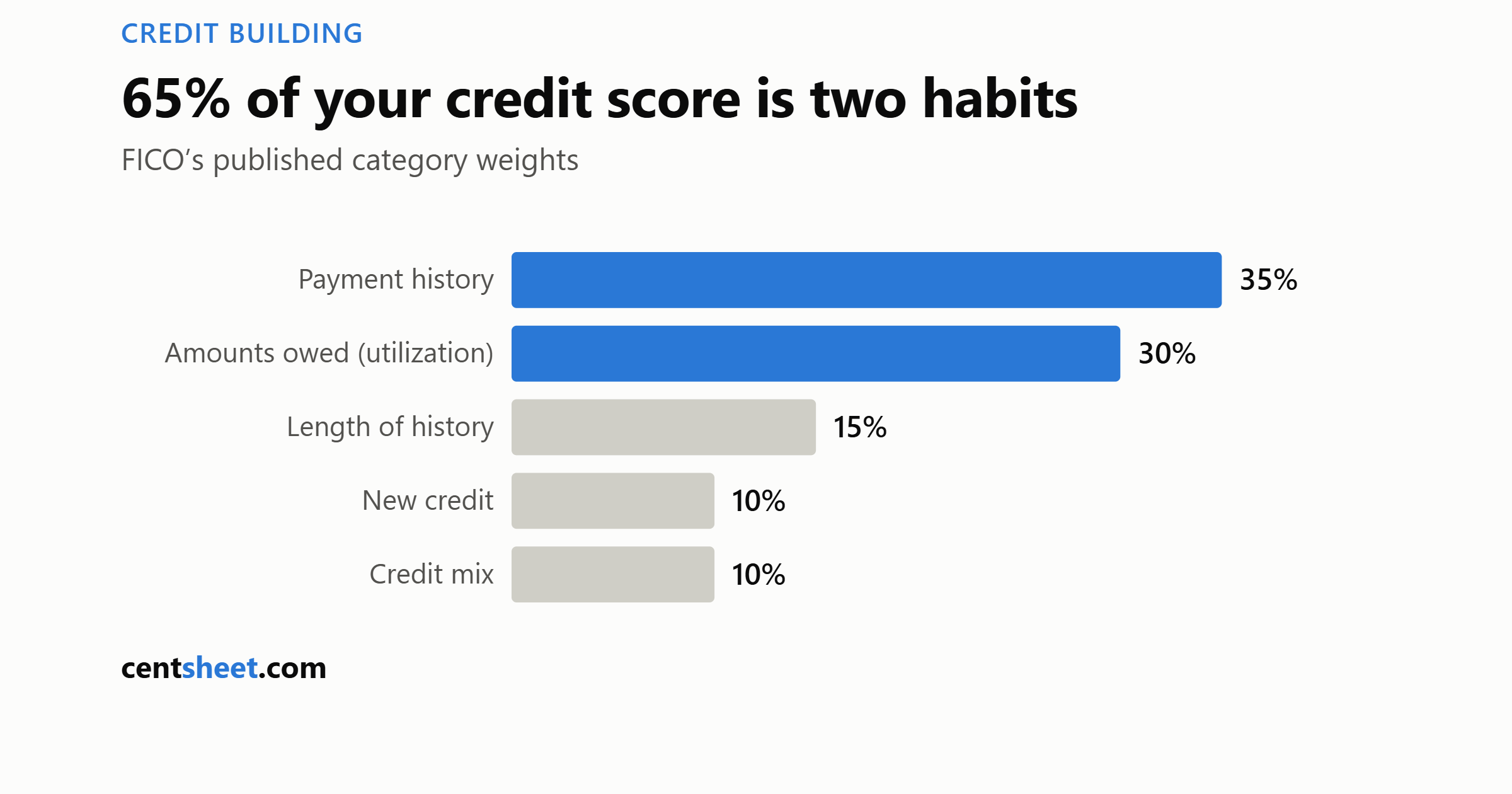
US credit scores reward, above all: a history of on-time payments, low utilization, and account age. Notice what’s not on the list: carrying a balance. The most durable myth in consumer credit is that you must pay interest to build credit. You never need to carry a balance. Paying in full, on time, every month builds the identical history at zero cost.
Account age matters more than people expect, which creates the first rule: your first card is a keeper. Choose something with no annual fee that you can leave open for a decade, because one day it will be your oldest account — and closing it would shrink your available credit and your average age at once.
Choosing: the realistic options
A secured card — you post a refundable deposit (commonly $200–500) that becomes your limit. Near-guaranteed approval, reports to the bureaus like any card, and the deposit comes back when you close or the issuer upgrades you. The right default if you have no file at all.
A student card, if you’re enrolled — unsecured, modest limit, designed for thin files.
Becoming an authorized user on a parent’s or partner’s old, well-managed card — their history can seed your file. It helps most as a supplement; pair it with a card of your own.
What to skip: store cards pushed at checkout (low limits, harsh rates, weak upgrade paths), anything with an annual fee at this stage, and “credit builder” products that charge subscription fees for what a secured card does free.
Whatever you choose, confirm it reports to all three bureaus — that’s the entire point — and prefer an issuer known to upgrade secured cards to unsecured ones.
Day-one settings
1. Autopay: statement balance in full. Not the minimum. This single setting makes late payments and interest structurally impossible while you build the on-time history that is most of your score. Set it before the card leaves the envelope, then still glance monthly (autopay failures happen; the payment history is yours either way). 2. Due-date alert a few days ahead, as the backstop. 3. Know your statement close date. As covered in the utilization guide, the balance that reports is typically the statement-close balance — on a $300 secured limit, a $150 grocery run reports as 50% utilization even if you pay in full. On small limits, pay down before the close.
The usage pattern
Put one or two predictable expenses on it — a subscription, gas — and pay in full. That’s it. You don’t need to “use 30%”; small, regular, fully-paid activity builds the same history. The card is a reporting device, not a spending increase.
Give it six to twelve months of clean history and the file exists: scores populate, better cards become approvable, limits rise. Resist the industry’s follow-up invitation — the credit line increase is fine to accept, but the spending increase it whispers about is how the payoff articles get their readers.
CentSheet publishes educational content, not personalized financial advice.
Get the CentSheet Money Brief
Email me CentSheet weekly: practical money decisions, new calculators, and useful worksheets. Unsubscribe anytime.