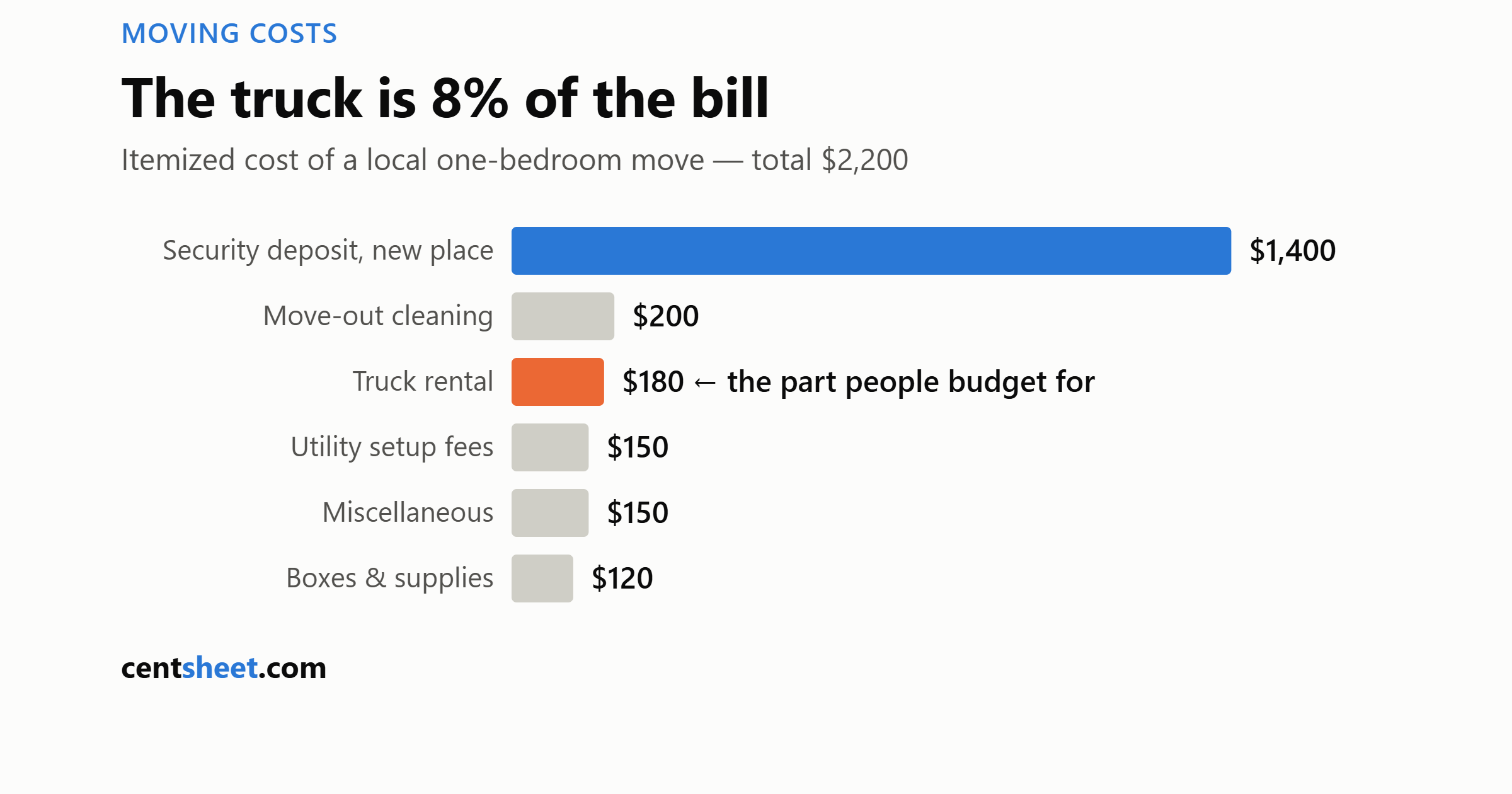
Ask what a move costs and most people quote the truck rental. The truck is usually the smallest line on the bill.
Moving is a classic sinking-fund expense: predictable, lumpy, and consistently under-budgeted — which is why it so often ends up on a credit card. Here is the itemized version.
A local move, line by line
Illustrative figures for a one-bedroom move across town, doing the lifting yourself:
| Line | Cost |
|---|---|
| Truck rental (day rate, fuel, mileage) | $180 |
| Boxes, tape, padding | $120 |
| Security deposit, new place | $1,400 |
| Utility connection and setup fees | $150 |
| Move-out cleaning | $200 |
| Miscellaneous (food, help, forgotten items) | $150 |
| Total | $2,200 |
The truck is 8% of the bill. The deposit is 64%. That ratio is the whole reason people misjudge moving costs — they budget for the visible expense and get ambushed by the structural one.
A long-distance move
Same one-bedroom, several states away, hiring movers:
| Line | Cost |
|---|---|
| Professional movers | $3,200 |
| Packing supplies | $200 |
| Security deposit, new place | $1,400 |
| Utility connection and setup | $150 |
| Travel (fuel, hotel, meals in transit) | $400 |
| One month of storage overlap | $150 |
| Miscellaneous | $250 |
| Total | $5,750 |
Both totals are illustrative — your rent, distance and stuff drive the real number — but the shape holds nearly everywhere: two large lines, several medium ones, and a long tail that only shows up when you list it.
The four costs people genuinely forget
1. Deposit overlap. You pay the new deposit before the old one returns — often 30–60 days later, sometimes minus deductions. For a few weeks you are out both. This single item wrecks more moving budgets than any other.
2. The dead-rent window. Leases rarely align. A week of overlap so you can move without a same-day scramble is worth paying for, but it is real money that no one lists.
3. Setup and connection fees. Internet installation, utility activation, sometimes a new deposit if you have no service history with that provider. Individually small, collectively $150–300.
4. Restocking. Cleaning supplies, pantry basics, a shower curtain, the trash can you didn’t move. Budget $200–300 and you’ll be close; budget zero and you’ll put it on a card.
Where the money actually gets saved
Ranked by yield, not by how often it gets recommended:
Move at the right time. Rates for movers and trucks spike at month-end, on weekends, and across the summer. A mid-month, mid-week, off-season move can cost meaningfully less for identical work — the single largest lever available.
Own less before you pack. Movers price by weight and volume. Every box you don’t move is money you don’t spend twice — once to move it, once to store it. Selling ahead of a move funds a real slice of the move itself.
Get free boxes. Liquor stores, buy-nothing groups, and workplaces have them. That’s $120 that doesn’t need spending.
Hire labor without the truck. Rent the truck yourself and hire loaders by the hour — a common middle path that keeps the biggest cost (full-service movers) off the table while saving your back.
Budget it like a sinking fund, not an emergency
A move is scheduled. You almost always know months ahead, which makes it the textbook case for sinking-fund treatment: divide the estimate by the months until moving day and set that aside monthly.
A $2,200 local move six months out is $367/month. That is a budget line. The alternative — finding $2,200 in the week of the move — is how moves get financed at 24% APR and stay expensive for a year afterward.
Build the estimate from the tables above, add 15% because moving estimates are optimistic in the same way software estimates are, and start the transfer now.
CentSheet publishes educational content, not personalized financial advice. Figures are illustrative examples, not sourced national averages; your costs will vary by market, distance and household size.
Get the CentSheet Money Brief
Email me CentSheet weekly: practical money decisions, new calculators, and useful worksheets. Unsubscribe anytime.