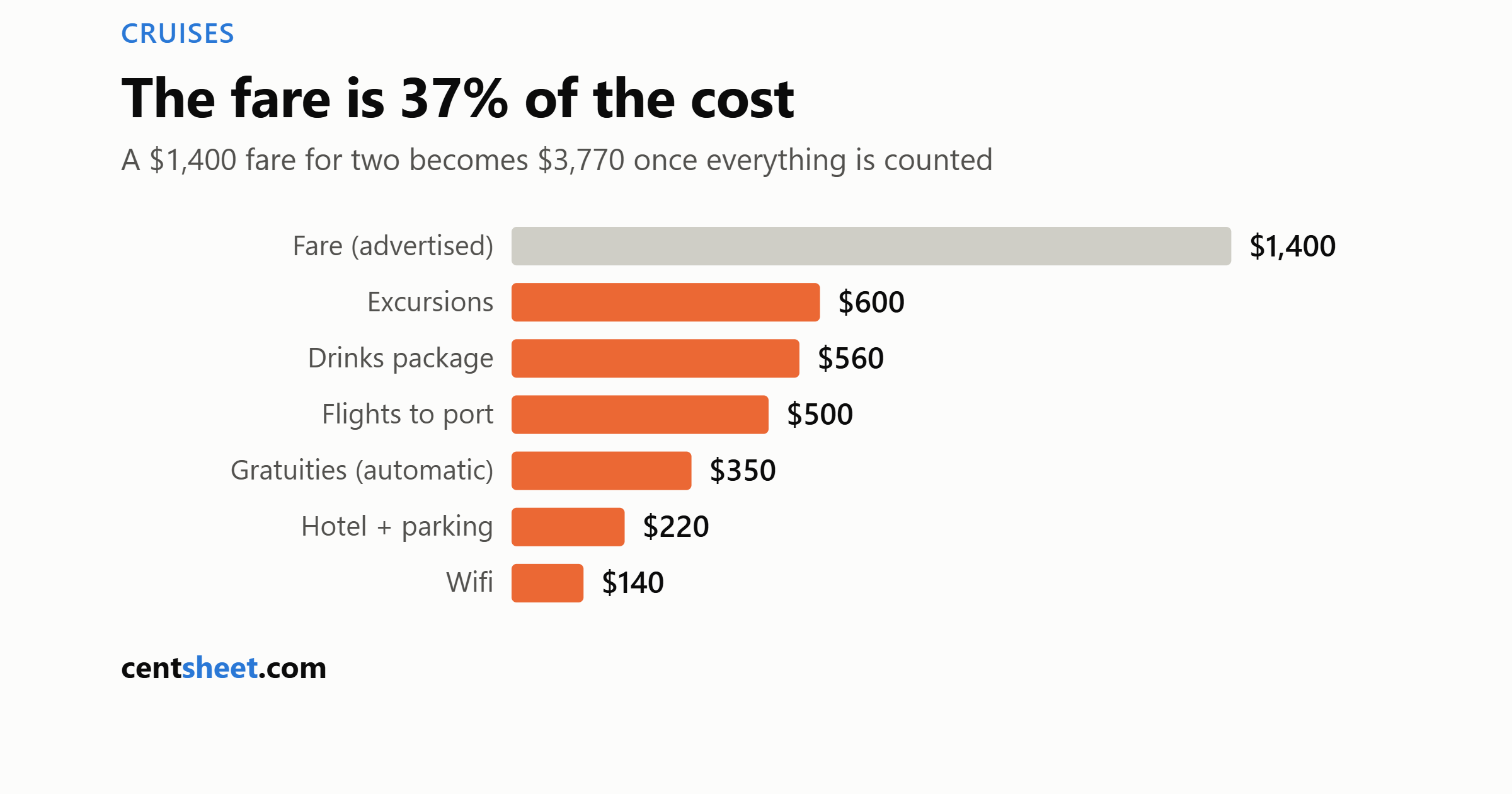
Cruise marketing is built around one number: the fare. It is a genuinely low number, and it is genuinely not what the holiday costs.
The real bill
A 7-night cruise for two, advertised at $1,400:
| Line | Cost |
|---|---|
| Fare (2 people, 7 nights) | $1,400 |
| Gratuities (auto-added daily) | $350 |
| Shore excursions | $600 |
| Drinks package | $560 |
| Wifi | $140 |
| Flights to the port | $500 |
| Pre-cruise hotel + parking | $220 |
| Total | $3,770 |
169% above the fare. The advertised price is 37% of what you actually pay.
None of this is hidden exactly — it is all disclosed somewhere — but the fare is what gets marketed, compared and remembered, and every other line is agreed to later, in smaller decisions, when you are already committed.
The lines worth understanding before you book
Gratuities are usually automatic, not optional. Most lines add a fixed daily amount per passenger to your onboard account. You can sometimes adjust it at guest services, but treat it as a mandatory cost when budgeting — because functionally it is.
Drinks packages are a bet, and the house sets the odds. A package priced per person per day is worth it above a certain number of drinks and not below. Do the arithmetic against how you actually drink, and note that most lines require all adults in a cabin to buy the package if one does.
Excursions are where the budget goes to die. Ship-run excursions are convenient and carry a significant markup. Independent operators or simply walking into port cost a fraction. The convenience is real; so is the price of it.
Wifi is priced like a hotel minibar and is one of the easier lines to simply skip for a week.
Getting to the port is a real trip in itself — flights, often a hotel the night before because missing the ship means missing the holiday entirely, and parking if you drive.
What the fare does include
Fairness requires saying it: the fare covers accommodation, most food, and entertainment — genuinely a lot. For families who would otherwise pay for hotel plus three meals plus activities, the all-in comparison can be favourable. The complaint here is not that cruises are bad value; it is that the advertised number is not the value being offered.
Budgeting one properly
Take the fare, then add 150–170% for a realistic all-in figure — or build your own version of the table above, which is better because your excursion and drink habits are the two biggest variables.
Then fund it as a sinking fund against the sail date. At $3,770 over eight months, that is about $471/month, and it means the onboard account gets settled from cash rather than becoming a credit-card balance that outlasts the trip.
The onboard-account mechanic deserves its own warning: everything on the ship is charged to a card with no cash friction, over seven days, while you are relaxed. That is a spending environment engineered against you. Setting a hard number before boarding — and checking the account mid-cruise rather than at the end — is the single most effective control available.
Related: the general trip-cost formula for non-cruise travel.
CentSheet publishes educational content, not personalized financial advice. Figures are illustrative for a mid-market 7-night cruise; fares and onboard pricing vary widely by line, season and itinerary.
Get the CentSheet Money Brief
Email me CentSheet weekly: practical money decisions, new calculators, and useful worksheets. Unsubscribe anytime.